


Kelly (left), supported by Hammer & NER, and her devoted sister, Anne
The sibling relationship is one of life’s most enduring and multifaceted connections, particularly for those with a brother or sister living with an intellectual disability. This bond often transcends mere companionship: Siblings frequently find themselves taking on roles as advocates, caregivers, and essential supporters in the lives of their loved ones. However, every sibling’s experience, every family’s experience, is different. Some embrace a caretaker role from an early age. Some are living their own life as their parents have traditionally provided the majority of care or decision making. However, as the parents age, will the sibling(s) be prepared to step into the decision-making role?
By engaging siblings in the planning process, families can facilitate a smoother transition into the future.
Planning for the Future
As parents age, shifting responsibilities for the care of a child with an intellectual disability to his or her siblings can be challenging. It’s vital for families to initiate conversations about future care early on, normalizing discussions to make them routine. Engaging siblings in conversations with service providers, can foster a sense of involvement and preparedness. Recognizing that each sibling’s experience is unique, it’s important to create a supportive environment where open communication can flourish.
Siblings may need to not only manage care previously handled by their parents, but also collaborate with healthcare professionals, and make critical decisions about their loved one’s future. This underscores the need for a collaborative approach, where siblings are active participants in care planning and decision-making. Families that involve siblings in these discussions not only bolster their confidence but also prepare them to handle the challenges that arise as their loved ones age. Effective planning can encompass various life transitions—moving from school to adult services, living independently or moving to a group home, and addressing potential grief. A useful tool in this process is the “Letter of Intent,” a non-legal document that outlines important information for future planning. This letter can include:
- Family history: Traditions and stories that shape identity
- Support network: Friends, neighbors, and community resources
- Medical history: Key medical contacts and medications
- Personal histories: Capabilities and interests of the individual
- Activities history: Education, jobs, and social engagements
- What works: Effective behavioral strategies and motivators
- Financial planning: Estate and legal arrangements
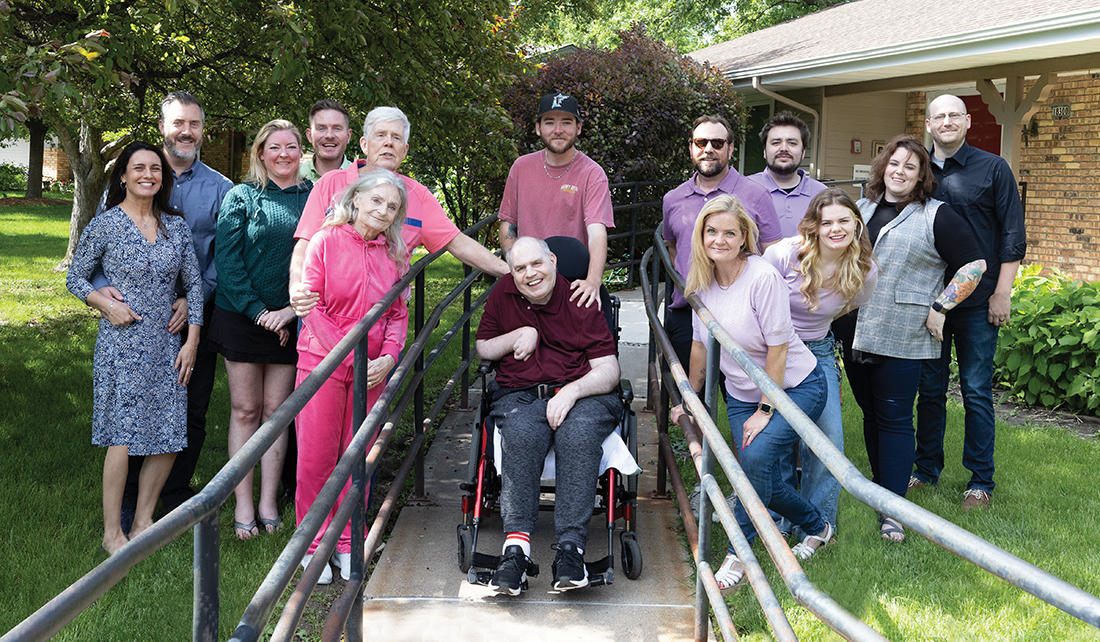
Mike Smith (center) surrounded by his large and caring family
Support for Siblings
Siblings often juggle multiple responsibilities, including caring for aging parents, their own children, and managing careers. They may not always feel prepared to engage fully in support planning but appreciate being included in conversations about their loved one’s care. Recognizing the potential barriers—financial, personal, or logistical—that siblings may face is also crucial in ensuring they can fulfill their supportive roles. Active participation in care planning is crucial, even if siblings cannot attend every meeting their insights should be incorporated into care plans, fostering smoother transitions, and ensuring their loved ones receive the best possible support.
As siblings age, they will inevitably face end-of-life issues and the transition of caregiving roles.
The role of siblings in the lives of individuals with disabilities is essential and multifaceted. By providing siblings with the support and resources they need, families can ensure they remain a vital part of their loved one’s support system. At Hammer & NER, we celebrate the invaluable contributions of siblings and are committed to empowering them as advocates and caregivers for their loved ones. Together, we can foster a more inclusive and supportive community for individuals with disabilities and their families.
(In photo above, Barb Tuckner (right) is pictured with her sister, Janet, who is supported by Hammer & NER)
I’m 68 my “intellectual disabled” brother is 65. I now have the responsibility of taking care of him. This has become a far greater challenge than I had imagined. He lived with my mom and dad his entire life. After dad passed away, mom had an individual hired to help with my brother 3 days a week. The caregiver pretty much had little interaction with him except when my brother really required assistance. Ie going to the bathroom, showering and fixing lunch. The caregiver did nothing on a daily basis to give him responsibilities or even teach him anything about responsibility.
I’ve now been taking care of my brother since August of last year. And released “the caregiver” from our employ. My brother has been given specific chores which in most cases he will grudgingly perform.
The issue now is this….he use to be very good about not wetting his bed but since I brought him to our home for the Holidays, he has wet his bed every night. He does wear protective pull ups but he still manages to soak the bed. This, needless to say, has added more work daily., strains my relationship with my marriage, and I just can’t seem to get him to stop wetting the bed. We’ve shut of his TV at night. Set alarms and left dimmed lights on so he can find his way to the bathroom.
Any recommendations?
Good for you for stepping up, and for believing that your brother can handle some responsibilities, not just receive care. I was responsible for my youngest brother through his adult life, and I understand many of the dilemmas very well.
In terms of the bed wetting, it’s impossible to know for sure, but I would immediately buy a waterproof mattress cover to use as well as the depends.. Adults with such disabilities are often very sensitive and do not quickly adjust to new settings – and the bed wetting and your family’s natural responses may add to make him even more nervous, so I would reassure him that one day he will learn, not to worry for now, and set up the easiest system you can, for the nightly laundry to get done each day..
Such people need family but also others in their lives. My brother liked school and reading simple young adult books – Carl Deuker is a great Young Adult author who writes really well about teens living in families who move to a new area, he writes about how the teen finds his way around new peers. If your brother is not a good reader, you or someone in your family, could read several paragraphs to him each night – that takes the focus off of you as his social worker, guide, judge of his effort, family – and lets you spend half an hour, both enjoying a book together. He’d get more used to it each day. My brother and I read together weekly (and I never missed) when he lived in a Nursing Home in his later years, we met on Zoom.